Contents
In 2026, connection speed is no longer measured solely in gigabits per second, but in milliseconds of latency. Even with the fastest fiber, the physical distance between your user and your server remains an insurmountable barrier: it is the limit of the speed of light.
To offer an instant experience, the solution is no longer to build bigger data centers, but to bring them closer. This is the role of Edge Servers. At Daillac, we integrate this layer of proximity to transform the responsiveness of our clients’ platforms.
1. What is Edge Computing?
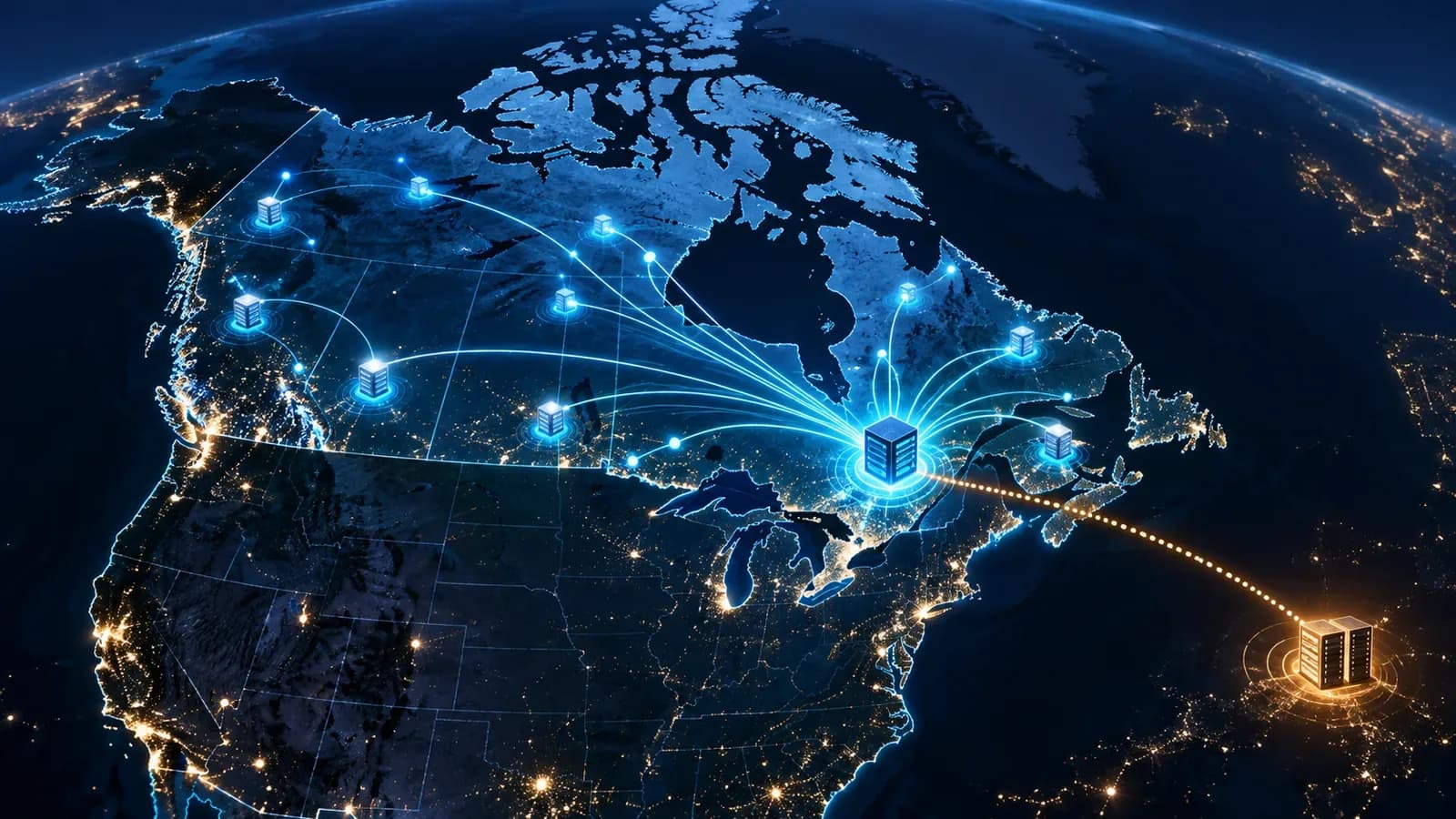
Edge Computing involves processing data as close as possible to where it is generated or consumed. Instead of sending each request to a central server located in Virginia or Ireland, the request is intercepted and processed by an "edge" server, often located in the same city as the user (for example, in Montreal for your Quebec clients).
2. The impact of geographic proximity: 3 major benefits
A. Eradicating latency
Latency is the invisible enemy of conversion. A 500ms delay is enough to reduce user engagement. By using Edge servers, we bring this delay down to less than 20ms. For the user, the site no longer "loads"; it appears instantly.
B. Bandwidth relief and reduced costs
Sending video streams or massive amounts of data across the Atlantic is expensive and clogs the network. By serving heavy content (images, videos, scripts) from local nodes, you reduce the load on your main server and optimize your infrastructure costs.
C. Better resilience and availability
If a central data center goes down, your entire system stops. With an Edge architecture, if a local node encounters a problem, traffic is automatically redirected to the nearest Edge server,ensuring transparent service continuity for the user.
3. Edge and AI: The Winning Duo of 2026
Generative artificial intelligence and conversational agents require immediate computing power. Sending a voice command to a remote server, waiting for processing, and receiving the response creates a frustrating delay.
- Edge inference: In 2026, we deploy AI models directly on Edge servers. This allows real-time interaction, essential for home automation, autonomous vehicles, or interactive customer support.
4. An Unexpected SEO Advantage
Google and other search engines favor sites that offer an impeccable user experience. "Server response time" is an explicit ranking criterion. By using Edge Computing, you radically improve your web vital signals, propelling your site to the top of local search results.
Conclusion: Stop Making Your Data Travel Unnecessarily
The future of the web is distributed. In 2026, ignoring geographical proximity means accepting to lose customers to more responsive competitors. At Daillac, we help you deploy your applications as close as possible to your audience for uncompromising performance.
D